If 2024 was about experimentation, 2025 is about laying track. Get your libraries tidy, your data flowing and your processes stable… then let the compounding begin. From the second half of 2026 you’ll feel the payoff as optimised recipes, cleaner tool data and smarter geometries run with fewer surprises and shorter cycles.
This outlook isn’t crystal-ball theatre. It’s a practical brief for people who cut parts for a living. We’ll show where coatings really move the needle across aluminium, steels and abrasive boards, why “algorithmic” flute designs pair so well with constant-load toolpaths, and how AI is shifting from showpiece to shopfloor assistant. You’ll also see why ISO 13399 matters more than most admit, how RFID and presetters remove retyping errors, and where regrind plus recycling turns into a procurement lever rather than a nice idea.
Most importantly, you’ll leave with Monday-morning plays: what to standardise now, which pilots to run next, and how to bank reliable gains through 2027. Fewer variables, calmer setups, better margins. Let’s set up the win.
Executive summary
- Coatings shift from generic to targeted. Expect HiPIMS AlCrN/AlTiN to become the premium default on heat-soaked steels (harder films, better adhesion, happier dry/MQL cuts). In aluminium and other non-ferrous work, DLC and ZrN will keep the built-up edge at bay and finishes consistent, especially on single-flute O-flutes and polished geometries.
- Geometry gets algorithmic. Variable helix/pitch, asymmetric flutes and chip-splitters pair naturally with constant-load toolpaths; chatter windows widen without voodoo.
- AI stops auditioning and joins the crew. CAM assistants propose strategies and schedule feeds; stability-aware optimisers inside mainstream CAM trim cycle time and kill chatter on the first article.
- Tool data becomes plumbing. ISO 13399 libraries, vendor add-ins and RFID/presetters reduce retyping, protect offsets and enable unattended slots without sphinx-riddles at setup.
- Circularity grows teeth. Regrind at “as-new” geometry and digital carbide recycling portals with CO₂ tracking become standard procurement levers, not just nice-to-haves.
- Hybrids creep in where they pay. Additive+subtractive cells (LMD + milling) find sane niches: repair, conformal channels, near-net preforms that save hours of roughing.
Now → next → later (2025–2027)
- Now (0–6 months): standardise your top 50 tool assemblies; import ISO 13399 data; pilot one chatter-aware feed optimiser on a noisy op; run coating A/Bs on your worst aluminium and steel jobs.
- Next (6–18 months): roll out RFID/presetting on critical families; adopt PCD/diamond where abrasive boards are burning carbide; freeze validated recipes in CAM libraries.
- Later (18–36 months): add digital-twin checks on high-risk finishes; formalise regrind SLAs and CO₂ receipts with suppliers; expand unattended windows.
Where we are now (and why it sets up the next two years)
The past 12–18 months quietly laid the pipes. Vendors started shipping data (not just steel): ISO 13399-based tool libraries and add-ins that drop clean assemblies and parameters straight into CAM—no retyping holders, no guessing taper codes. Boring? Absolutely. Also the reason setups are getting calmer.
At the same time, AI moved into production. CloudNC’s CAM Assist positions strategies and feeds from physics-based models; Siemens NX integrated Productive Machines’ SenseNC feeds to remove chatter and lift throughput—21–25% cycle-time cuts reported in customer demos/case studies. Not every part, not every time; enough to be real.
And sustainability finally got logistics: regrind with guaranteed geometry, recycling with self-service portals and CO₂ certificates—procurement can track the numbers, not just the vibes.
Materials and coatings: what will actually win
- Aluminium & non-ferrous (including router work): DLC and ZrN remain the safest bets to suppress welding and BUE. Pair with polished O-flute geometries; the combo keeps chips moving and surfaces glossy without babying feeds.
- Steels & abrasive boards: AlTiN/AlCrN—especially HiPIMS variants—push hotter, drier programmes with stronger adhesion and oxidation resistance; they’ll keep spreading from niche to default on premium solid round tools.
- Composites & laminates: Diamond-coated/PCD routers tame fibre pull-out and hold edge quality for an order of magnitude longer than carbide in abrasive stacks; life multipliers vary by material and geometry, but 10–25× in production woodworking is a fair planning range.
- So what (play): build a tiny matrix—material × operation × candidate coating—run A/Bs with locked fixtures and chip loads. Keep the winners in your master library. (Yes, actually write it down. Future-you will cheer.)
Geometry gets smarter (and less guessy)
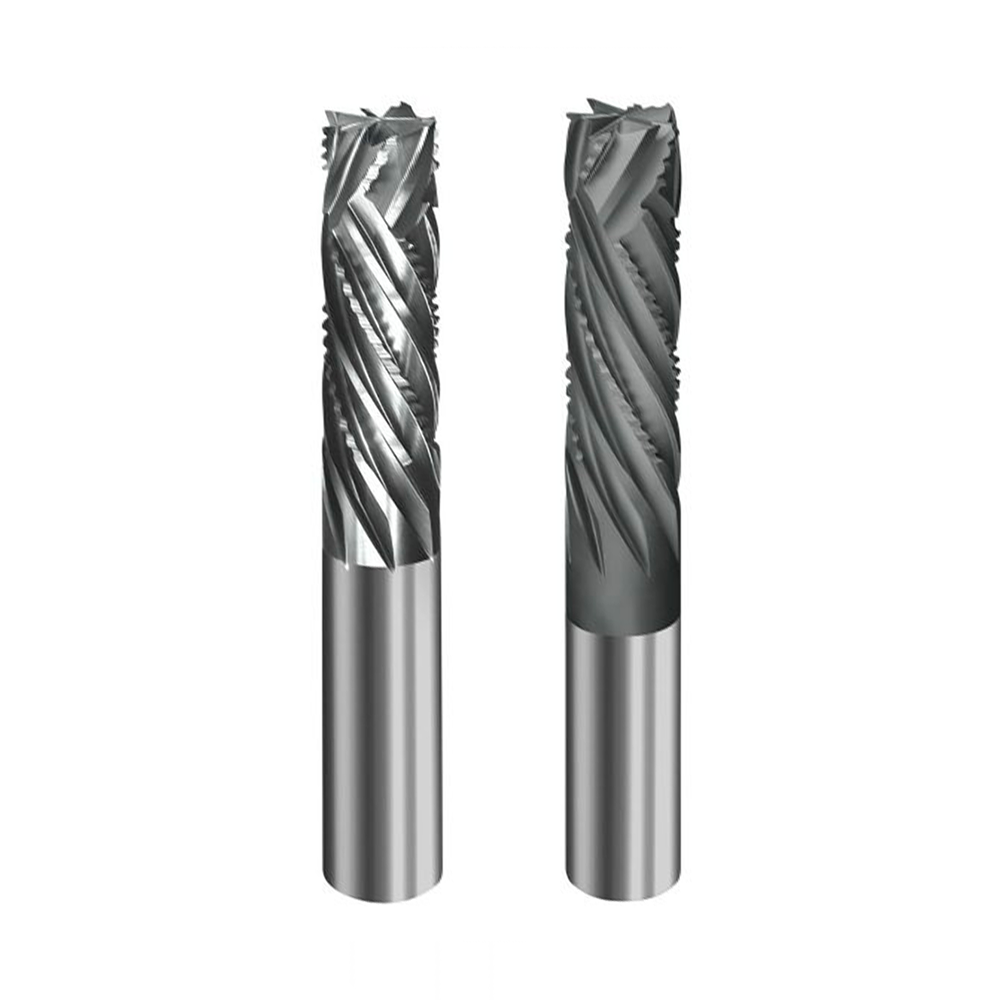
The “weird” flutes weren’t a fad; they were waiting for software to drive them properly. Variable helix/pitch and asymmetric flutes expand chatter-free zones; chip-splitters lower forces during slotting; short-upcut compressions protect faces in laminates at partial depths. These geometries pair naturally with constant-load roughing.
Representative proof points: Kennametal’s HARVI family leans into asymmetric/variable features for stability at higher MRRs; academic work continues to show variable helix/pitch widening the stable lobes.
Shop note from the transcript: choose geometry by material first, then the operation, then the edge priority. In wood products, compression for plywood/MDF, 2-flute down-cuts for hardwood edges; in plastics, single-O-flute up-cuts keep heat under control. (And yes, faster feeds can be cooler—chip load, not superstition.)
Automation and AI: from “nice demo” to “default button”
Three lanes to watch:
- Strategy generation – assistants that auto-propose 70–80% of ops so programmers spend time on the weird bits, not the boilerplate.
- Stability-aware feeds – in-path scheduling that raises/lower feed where the part and machine need it; chatter risk is modelled, not discovered with your ears.
- Ecosystem moves – ModuleWorks invested in Toolpath Labs; Kennametal joined the round; read that as “optimisation will be everywhere you already work.”
Play: pick one repetitive family (say, 3-axis pockets in 6082), capture baselines, run the optimiser for two weeks, freeze the winner into the library. Repeat.
Tool data, RFID and the quiet triumph of standards
ISO 13399 finally feels normal. Sandvik’s CoroPlus Tool Library (among others) exports assemblies straight into mainstream CAM; presetters and RFID round-trip the real-world measurements, which means fewer fat-fingered offsets and easier audits. It’s… plumbing. And it’s where unattended hours come from.
RFID/Tool-ID systems (Haimer, Caron, Balluff et al.) are mature and boring in the best way—tap, load, offsets populated. If you’re still keying from paper, you’re taxing your future self.
Play: lock stick-outs and IDs on your top 50 tools; mirror them in CAM; add RFID on the families that most often bite you at setup.
Tooling for eco-materials and modern composites
Two concurrent shifts:
- Materials are rougher on tools (recycled boards, HPL, bio-resins, CFRP/GFRP).
- Expectations are higher (less dust, burr-free edges, fewer sanding minutes).
Outlook: PCD/diamond becomes the economic default anywhere you’re burning through carbide on abrasive stacks; composite routers with diamond or DLC keep fibres in line and delamination under control. Track edge quality and sanding minutes per part as seriously as tool life.
Switch point: if you’re killing two carbides per shift on laminates, you’re already late to PCD. Trial one, document life and finish, move on.
Regrind or replace: the 2025–27 economics
The shift is from “just buy new” to regrind + recycle, with receipts. Big players guarantee original geometry and coatings on regrind; portals buy back used carbide with CO₂ reporting and shipment tracking. Procurement finally has numbers to compare cost per finished metre across the tool’s full life.
Play: model three regrinds vs new, and include the time you save by keeping preset lengths and IDs constant.
High-speed machining, routers vs mills — and the hybrid wave
HSM keeps spreading because CAM now bakes in constant chip load and smart engagement; you get higher MRR without roulette on tool life.
Router reality check: workholding and acceleration cap your top feed more than spindle horsepower; when vacuum is the limiter, drop RPM to keep chip load fat enough for cool cutting. (Counter-intuitive, but—chip thinning is a thing.)
Hybrids (additive + subtractive) won’t eat your whole shop, but they will nibble profitable niches—repair, conformal cooling, near-net preforms that trade stock for time. Plan for interrupted cuts and edge preps that survive them.
Digital twins: mainstream enough to matter
The gloss is off; the utility remains. In practice, a useful “twin” for machining is a CAM-accurate tool assembly inside a kinematics-accurate machine, plus an optimisation loop watching vibration or stability to nudge feeds. The literature in 2024–25 shows the shift from lab to line; the tangible win is fewer test cuts and calmer spindles.
Play: export 3D tool assemblies from a vendor library, use a verified machine model, and add one closed loop (e.g., chatter-aware finishing). Start there, not with a manifesto.
What will define 2026–27
- HiPIMS multilayers normalise on premium steel tools; dry cutting windows widen without trashing finish
- Ceramic/PCBN keep advancing into “carbide-pain” alloys with friendlier windows and clearer playbooks.
- Embedded optimisation shows up across quoting → CAM → controller; the ModuleWorks/Toolpath/Kennametal triangle is your tell.
- RFID-by-default on holders, dispensers and presetters for unattended time and audit trails.
- Circularity with receipts becomes standard in RFPs: regrind SLAs, buy-back, live CO₂ dashboards.
Field notes (plays you can run this quarter)
- Library lock-in: standardise top 50 assemblies; import ISO 13399 data; freeze feeds where proven; ban freelance stick-outs.
- One optimiser pilot: pick a fragile finish op, run NX + SenseNC (or equivalent), and freeze the winner.
- Coating bake-off: DLC vs ZrN on thin-wall aluminium; HiPIMS AlCrN vs current favourite on a heat-soaked steel job. Measure burrs, spindle load, life.
- Regrind model + recycling: add CO₂ and downtime to the spreadsheet; change the conversation from tool price to cost per finished metre.
A few straight-from-the-shop insights
- Start selection by material, not by catalogue romance: plywood/MDF → compression; hardwood edges → 2-flute down-cut; plastics → single-O-flute up-cut (and—counter-intuition alert—often higher RPM, but only if the feed keeps the chip thick enough not to melt).
- Cutting too slow creates heat (chip load collapses, flutes rub, friction skyrockets). It’s why “babying the cut” burns plywood and leaves black drill holes.
- Aluminium on routers? One or two flutes, not six. Milling instincts don’t port 1:1 to high-RPM routers.
Those may sound obvious. They’re the things that quietly rescue margins.