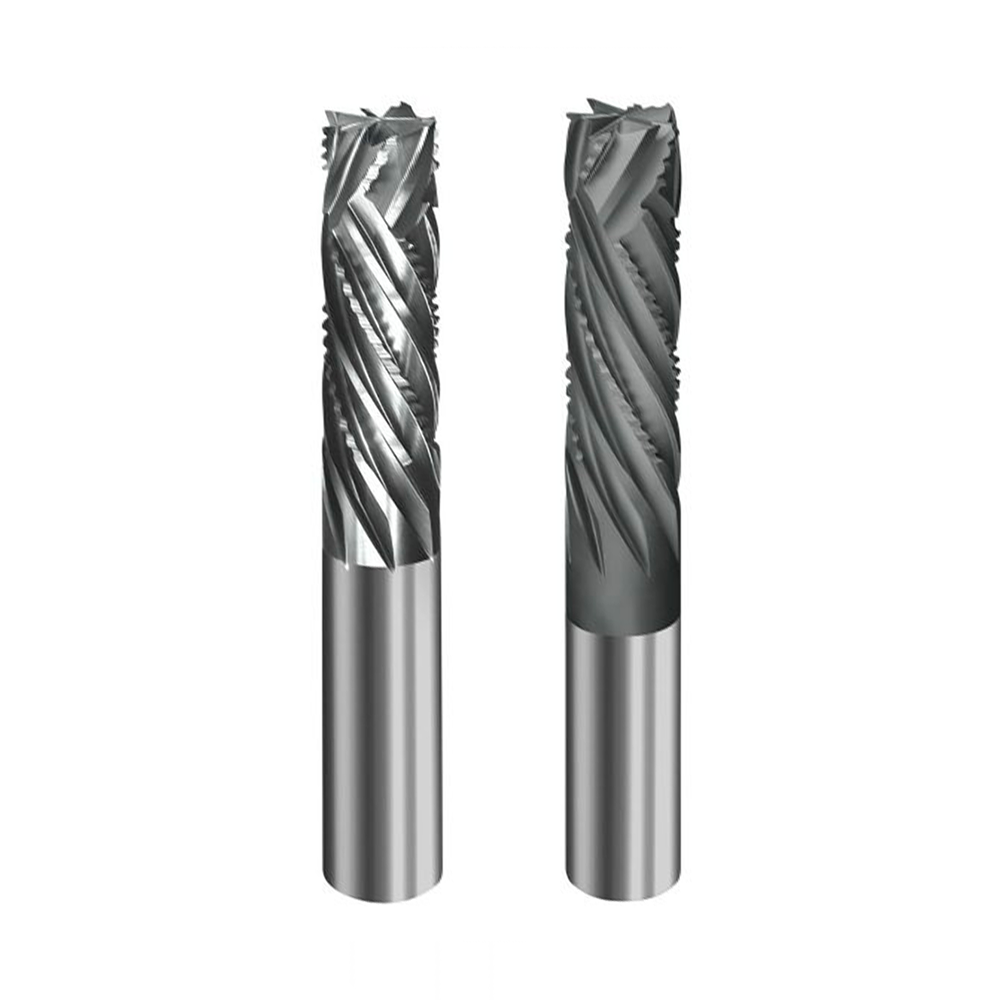
Choosing the right CNC router bit is not just about diameter, flute count or price. For professional users, tool coating can also make a major difference to cutting performance, tool life, edge quality and production efficiency.
But coatings are often misunderstood.
A coated cutter is not automatically better than an uncoated cutter. In some applications, the right coating can help you cut cleaner, run longer and reduce downtime. In others, an uncoated polished carbide tool may give a better finish, especially where sharpness and chip evacuation matter most.
The key is to choose the cutter for the material and operation first. Then decide whether a coating will improve performance.
This guide explains what CNC tool coatings do, when they are useful and how to choose the right router bit for your material, finish and production requirements.
Contents
- What are CNC tool coatings?
- Why coatings matter in CNC routing
- What coatings can and cannot do
- Start with the material, not the coating
- Why cutter geometry comes first
- Common CNC tool coatings explained
- Choosing the right coated or uncoated bit by material
- Coated versus uncoated CNC router bits
- How coatings affect tool life, finish and cost per part
- Common mistakes when choosing coated CNC bits
- CNC router bit selection checklist
What are CNC tool coatings?
CNC tool coatings are thin layers applied to cutting tools to improve performance in specific machining conditions. They are commonly used to increase wear resistance, reduce friction, manage heat or prevent material sticking to the cutting edge.
In CNC routing, coatings may help with:
- Longer tool life
- Cleaner cutting over longer runs
- Reduced heat build-up
- Less material sticking to the cutter
- Improved chip flow
- More consistent edge quality
- Fewer tool changes
- Reduced waste and rework
However, coatings are only one part of the tooling decision. The base material of the tool, flute geometry, spindle speed, feed rate, chip load, workholding and extraction all play a role.
A coating enhances the right tool. It does not turn the wrong tool into the right one.
What coatings can and cannot do
A good coating can help a cutter perform better in the right conditions. It can extend tool life, improve consistency and reduce common issues such as wear or built-up edge.
But coatings cannot solve every cutting problem.
| Coatings can help with | Coatings cannot fix |
| Tool wear | The wrong cutter geometry |
| Heat resistance | Incorrect feeds and speeds |
| Friction | Poor chip evacuation |
| Built-up edge | Weak extraction |
| Longer production runs | Poor workholding |
| More consistent finish | Using one tool for every material |
For example, if acrylic is melting during cutting, the issue may not be coating at all. It could be that the tool is rubbing instead of cutting, the spindle speed is too high, the feed rate is too low or the flute design is not clearing chips properly.
Likewise, if laminated board is chipping, the answer may be a compression cutter rather than a different coating.
This is why professional tool selection should start with the material and the job, not the coating.
Start with the material, not the coating
Different materials behave very differently under a CNC cutter. Some are abrasive. Some are heat-sensitive. Some chip easily. Some produce fine dust. Some create stringy swarf that must be evacuated quickly.
Before choosing a coated or uncoated tool, ask: what are you cutting?
| Material | Common challenge | Tooling consideration |
| Aluminium | Heat, chip welding and built-up edge | Use sharp tooling with strong chip evacuation. Consider ZrN, DLC or specialist aluminium cutters for production work. |
| Acrylic | Melting, chipping and poor edge finish | A polished O-flute cutter is often more important than coating. |
| Plastics | Smearing, melting and stringy swarf | Use sharp single-flute or polished tooling with good chip clearance. |
| MDF | Abrasive dust and tool wear | Prioritise carbide quality, extraction and suitable feed rates. |
| Plywood | Splintering and inconsistent layers | Use upcut, downcut or compression tooling depending on the required finish. |
| Laminates | Chipping, edge breakout and wear | Compression tooling and specialist cutters are often key. |
| ACM | Mixed material behaviour from aluminium skin and plastic core | Choose tooling designed for clean chip control and edge finish. |
| Composites | Severe abrasion, dust and delamination | Use specialist composite cutters. Diamond-coated tooling may be suitable. |
| Hardwood | Burning, grain tear-out and edge quality | Use sharp tooling, correct feed rates and suitable flute design. |
The more demanding the material, the more important the total tooling setup becomes. Coating may be part of the answer, but it should support the wider cutting strategy.
Why cutter geometry comes before coating
One of the most common tooling mistakes is choosing a coating before choosing the correct cutter type.
For CNC routers, geometry often matters more than coating. Flute design, cutting edge sharpness and chip evacuation can have a bigger impact on finish quality and tool life than the coating itself.
| Cutter type | Typical use |
| Single-flute cutter | Aluminium, plastics and jobs requiring good chip clearance |
| O-flute cutter | Acrylic, plastics and non-ferrous materials |
| Upcut spiral bit | Fast chip evacuation and deeper cutting |
| Downcut spiral bit | Cleaner top edges on sheet materials |
| Compression cutter | Clean top and bottom edges in panels, plywood and laminates |
| V-bit | Engraving, sign making, chamfering and lettering |
| Ball-nose cutter | 3D profiling, curves and contoured surfaces |
| Diamond-coated cutter | Abrasive composites, carbon fibre, graphite and some laminates |
For example, when cutting laminated panels, a compression cutter may be the right choice because it helps control breakout on both the top and bottom faces. Whether that cutter should also be coated depends on production volume, material abrasiveness and expected tool life.
When cutting acrylic, a polished O-flute may be the best option because the clean, sharp geometry helps reduce melting and improve edge finish. In that case, coating may be less important than flute quality.
The order of decision should usually be:
Material first. Operation second. Cutter geometry third. Coating fourth.
Common CNC tool coatings explained
Tool coatings are often described using technical abbreviations. For many professional users, the important question is not what the coating is called, but what problem it helps solve.
| Coating | What it means in practice | Typical relevance |
| Uncoated carbide | Sharp, versatile and suitable for many routing applications | Plastics, acrylics, timber, general-purpose cutting and short runs |
| TiN | A general-purpose wear-resistant coating, often gold in colour | Light to moderate wear resistance |
| TiCN | A harder coating used for improved wear resistance | Abrasive materials and some production applications |
| TiAlN / AlTiN | A high-temperature coating commonly associated with tougher metal cutting | More relevant to metal machining than everyday routing |
| ZrN | A low-friction coating often used for non-ferrous materials | Aluminium, brass, copper and some plastics |
| DLC | A very low-friction coating that can reduce sticking and built-up edge | Aluminium, plastics and other materials prone to sticking |
| Diamond coating | A very hard, wear-resistant coating for abrasive materials | Composites, carbon fibre, graphite and specialist laminates |
This is not a case of one coating being “best”. Each coating is designed to solve a different problem.
A diamond-coated cutter may perform well in abrasive composite material, but that does not mean it is the right choice for acrylic. A ZrN-coated aluminium cutter may help reduce built-up edge, but it still needs the right flute design and chip load.
Choosing the right coated or uncoated router bit by application
The most useful way to choose tooling is to start with the job you need to complete.
Cutting aluminium
Aluminium can be challenging because heat and chip welding can quickly damage cut quality. If chips are not evacuated properly, material can stick to the cutting edge and create built-up edge.
For aluminium, look for:
- Router bits designed specifically for aluminium
- Single-flute or specialist geometry for chip clearance
- Sharp cutting edges
- Correct chip load
- Air blast or lubrication where appropriate
- Coatings such as ZrN or DLC for production use
A coating can help reduce friction and sticking, but it cannot compensate for poor chip evacuation. If the tool is rubbing or recutting chips, tool life and finish quality will suffer.
Cutting acrylic and plastics
Acrylic and many plastics are sensitive to heat. The wrong setup can cause melting, smearing, rough edges or chips welding back onto the cut.
For acrylic and plastics, look for:
- Polished O-flute cutters
- Sharp single-flute tooling
- Good chip evacuation
- Correct feed rate to prevent rubbing
- A setup that avoids excessive heat
In many plastics, an uncoated polished tool may be the best choice. The sharp cutting edge and smooth flute can matter more than a coating.
Cutting MDF and timber-based boards
MDF is abrasive and produces fine dust, which can accelerate tool wear. Plywood and timber-based boards can also vary in density, glue content and grain behaviour.
For MDF and board cutting, look for:
- Good-quality carbide tooling
- Suitable upcut, downcut or compression geometry
- Strong dust extraction
- Correct feed and speed settings
- Production-grade cutters for longer runs
Coatings may help in some production environments, but extraction and tool geometry are critical. Dust and chips left in the cut can damage finish quality and increase heat.
Cutting plywood and laminates
Plywood and laminated materials can chip or splinter, especially when edge quality matters on both faces.
For plywood and laminates, look for:
- Compression cutters for clean top and bottom edges
- Downcut tools where the top edge is the priority
- Upcut tools where chip evacuation is more important
- Specialist laminate tooling for demanding surfaces
- Coated options where wear is a recurring issue
Here, the tool’s cutting action is usually the first decision. Coating can help with wear, but it will not solve breakout if the wrong geometry is being used.
Cutting composites
Composites can be highly abrasive and may create health and safety concerns due to fine dust. They can also delaminate if the wrong tool is used.
For composites, look for:
- Specialist composite cutters
- Diamond-coated tooling where appropriate
- Controlled feeds and speeds
- Effective dust extraction
- Toolpaths designed to reduce delamination
Diamond-coated tools are often considered for abrasive composite applications because they can offer strong wear resistance. However, the correct tool should always be matched to the specific composite, material thickness and edge quality requirement.
Sign making and engraving
Sign makers often work across a wide range of materials, including aluminium composite, acrylic, foams, hardwood, PVC and engraving laminates.
For sign making, look for:
- V-bits for lettering and chamfering
- Engraving tools for fine detail
- O-flute tools for acrylic and plastics
- Aluminium cutters for ACM and aluminium sheet
- Compression tools for clean panel edges
Because sign makers often switch between materials, it is important not to rely on one “general-purpose” cutter for everything. A small tooling library, selected by material and finish requirement, will usually give better results.
Coated versus uncoated CNC router bits
A coated tool is not always the best tool. In some cases, an uncoated cutter will give better performance because it offers a sharper edge or a more polished flute.
| Use a coated tool when… | Consider uncoated or polished carbide when… |
| Tool wear is a regular issue | Edge sharpness is the priority |
| You are cutting abrasive materials | You are cutting acrylic or soft plastics |
| You are running longer production batches | You are doing short runs or occasional jobs |
| Material is sticking to the cutter | Polished flute geometry solves the issue |
| Tool changes are causing downtime | Coating cost cannot be justified |
| You need more consistent tool life | You are still testing the right cutter geometry |
For many professional users, the best approach is to test. Compare coated and uncoated tools under the same conditions, then measure tool life, edge quality, cycle time, scrap rate and cost per finished part.
Think cost per part, not cost per cutter
A coated cutter may cost more upfront. That does not automatically make it more expensive.
The real question is whether it reduces the total cost of production.
A higher-quality or coated tool may be worth the investment if it:
- Lasts longer
- Reduces tool changes
- Holds a cleaner edge over longer runs
- Reduces rejected parts
- Improves consistency
- Reduces sanding, deburring or finishing
- Allows faster or more reliable production
- Lowers downtime
For professional users, the cheapest bit is not always the lowest-cost bit.
Better measures include:
| Measure | Why it matters |
| Cost per finished part | Shows the real production cost |
| Cost per metre cut | Useful for sheet materials, signs and nested production |
| Tool changes per shift | Highlights downtime and labour impact |
| Reject rate | Shows whether tooling is affecting waste |
| Finishing time | Reveals whether edge quality is saving labour |
| Tool life consistency | Helps production planning and repeatability |
If a coated cutter costs more but lasts twice as long and reduces rejected parts, it may be the better commercial choice.
Common mistakes when choosing coated CNC router bits
Choosing CNC tooling can be confusing, especially when coatings are described in technical terms. These are some of the most common mistakes.
| Mistake | Better approach |
| Choosing the coating before the cutter type | Start with the material and operation |
| Assuming coated tools are always better | Compare coated, uncoated and polished tools for the job |
| Using one bit for every material | Build a tooling set by material and application |
| Choosing by colour | Understand what the coating is designed to do |
| Ignoring chip load | Make sure the tool is cutting, not rubbing |
| Running too slowly | Slow feed rates can create heat and wear |
| Ignoring extraction | Dust and chips can damage finish and tool life |
| Not testing before production | Run controlled trials before scaling up |
Coatings should be treated as a performance option, not a shortcut. If the machine setup, workholding or feeds and speeds are wrong, a coating will not solve the underlying problem.
CNC router bit selection checklist
Before choosing a coated or uncoated CNC router bit, ask these questions:
| Question | Why it matters |
| What material am I cutting? | Different materials need different cutter geometries and coatings. |
| Is the material abrasive, sticky or heat-sensitive? | This affects wear, friction and chip evacuation. |
| What finish do I need? | Rough cutting, finished edges, engraving and profiling need different tools. |
| Am I cutting one-offs or production runs? | Coatings are often more valuable in repeat production. |
| What problem am I trying to solve? | Wear, burning, melting, chipping and poor finish have different causes. |
| Is my chip load correct? | The tool must cut cleanly rather than rub. |
| Is extraction good enough? | Chips and dust can reduce tool life and finish quality. |
| What is the true cost of downtime and rejected parts? | This helps justify premium tooling where it adds value. |
If you are changing material, increasing production volume or struggling with finish quality, it is worth reviewing the whole tooling setup rather than changing coating alone.
How to choose the right CNC router bit
The right CNC router bit depends on the material, the operation and the production goal.
As a simple guide:
| Need | Tool type to consider |
| Clean acrylic edges | Polished O-flute cutters |
| Aluminium cutting | Aluminium router bits, ZrN-coated or DLC-coated options |
| Clean panel cutting | Compression cutters |
| Fast chip removal | Upcut spiral bits |
| Clean top surface | Downcut spiral bits |
| High-volume board cutting | Production-grade carbide tooling |
| Abrasive composites | Specialist composite or diamond-coated tooling |
| Sign engraving | V-bits and engraving cutters |
| 3D profiling | Ball-nose cutters |
The best choice is rarely based on coating alone. A professional tooling decision should bring together cutter geometry, coating, feeds and speeds, extraction, workholding and the required finish.
Need help choosing the right CNC router bit?
Choosing between coated and uncoated CNC router bits can be difficult, especially if you are cutting a new material, moving into higher-volume production or trying to reduce waste.
Our team can help you choose the right cutter geometry, coating and setup for your machine, material and production goals.
Whether you are routing aluminium, acrylic, MDF, plywood, laminates, composites or signage materials, we can guide you towards tooling that helps improve cut quality, extend tool life and keep production running efficiently.