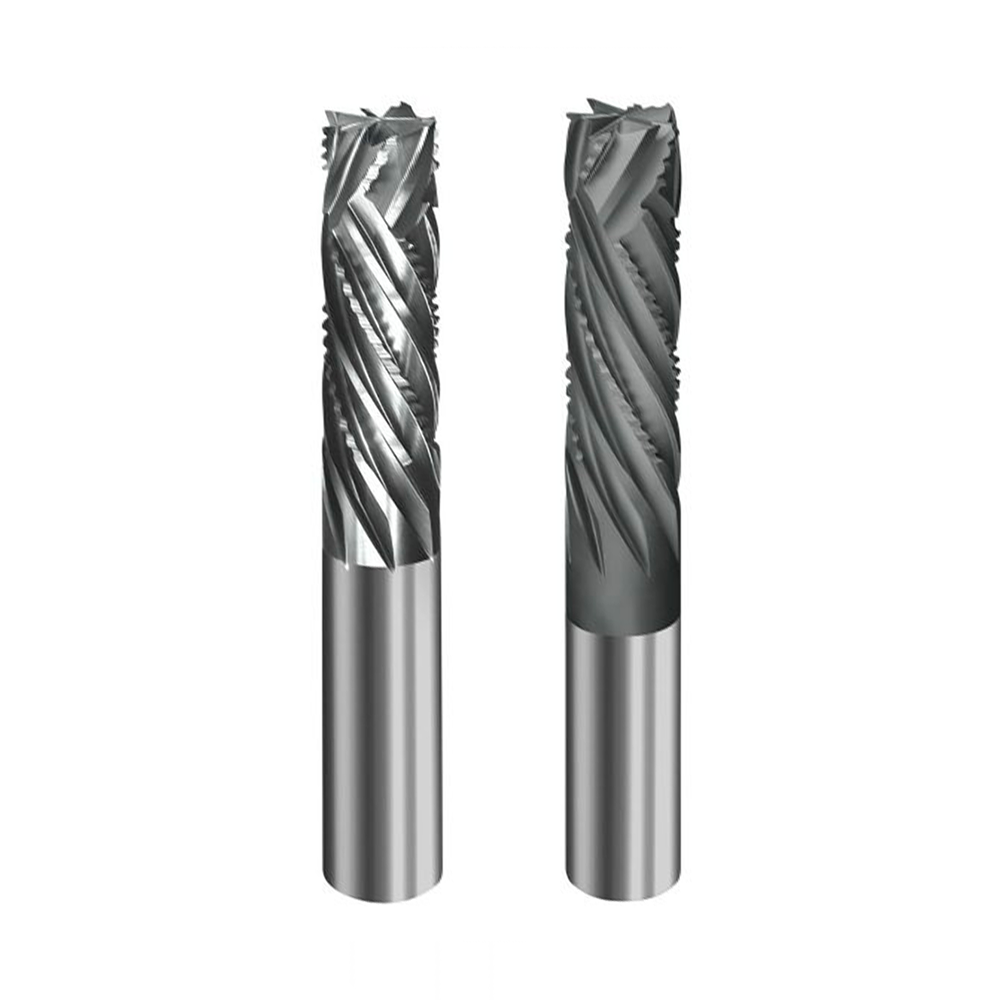
If you’ve noticed your carbide CNC tooling getting steadily more expensive over the last few years, you’re not imagining it. Prices have risen significantly across the board, and for high-volume workshops, the impact has been real. This article explains what’s behind it, what it means for how you buy tooling going forward, and why there’s a serious alternative that most CNC users haven’t considered yet.

What’s actually driving carbide prices up
Every carbide cutting tool – whether it’s a spiral router bit, a compression cutter or a straight flute – is made from tungsten carbide. Tungsten is a finite raw material, and the refined form used in tooling manufacture, ammonium paratungstate (APT), has been on an extraordinary upward price trajectory.
For years, APT prices were flat. Then, from around 2021 onwards, they went almost vertical. The reasons are structural: the majority of the world’s tungsten supply comes from China, global industrial demand has increased sharply, and supply hasn’t kept pace. There’s no sign of this reversing.
At our end, some of the carbide tools we supply have more than doubled in cost over the last three years. The increases that have appeared on your invoices aren’t a commercial decision – they’re a direct reflection of what’s happening in the global tungsten market. We’ve absorbed as much as we can for as long as we could.
| What the data showsTungsten hit record highs in January 2026, driven by shrinking inventories, Chinese export restrictions and robust industrial demand.- Reuters, January 2026 Some carbide rod prices have more than doubled in under two years, with supply heavily concentrated in China. – Zelinski Report Carbide cutting-tool manufacturers are actively adjusting prices in response to tightening raw-material supply and rising demand. – Machinery Market |
Not all carbide is equal – and that matters more now than ever
Before we get to alternatives, it’s worth understanding something important: carbide is not a single, uniform material. Different grades of carbide have significantly different performance characteristics. Lower-grade carbide wears faster, particularly in demanding applications, which means more frequent tool changes, more downtime and a higher long-term cost.
At current prices, lower-grade carbide represents poor value. You’re paying more for something that doesn’t last.
This is why we’re moving all our customers across to Vortex Tools, our exclusive UK premium carbide range. Vortex tools use a significantly higher grade of carbide. They last considerably longer in the right applications, and they’re now – in many cases – the same price or only marginally more expensive than the lower-grade alternatives they’re replacing. You get a better tool for the same or similar money.
But for some applications, there’s an even more compelling answer.
What if you could sidestep the carbide problem entirely?
PCD stands for polycrystalline diamond. It’s a cutting material made by bonding synthetic diamond particles together under extreme heat and pressure, usually onto a carbide substrate. The result is one of the hardest cutting materials available, far harder than tungsten carbide.
PCD isn’t new or experimental. It’s been used in aerospace and automotive manufacturing for decades. What’s new is that it’s becoming increasingly accessible and relevant for CNC woodworking and panel processing, particularly given current carbide prices.
Here’s the key point: the cutting element in a PCD tool is synthetic diamond, not tungsten carbide. That means the cutting edge itself isn’t dependent on tungsten carbide, even where a carbide substrate is used.
| What the data shows PCD delivers significantly longer tool life than carbide on MDF, laminates, composites and other abrasive materials. Despite a higher purchase price, PCD typically produces a lower cost per part in high-volume work by reducing tool changes, downtime and replacement frequency. |
Where PCD works best
PCD isn’t a universal replacement for carbide – and it’s worth being direct about that. It excels in specific applications, and in those applications, it’s exceptional.
PCD performs best in:
- MDF and HDF
- Melamine-faced and laminated board
- Composites
- Solid surface materials (such as Corian)
- Abrasive sheet materials
These are all materials that are notoriously hard on cutting edges. The abrasive nature of MDF dust, for example, will wear a standard carbide edge relatively quickly. PCD shrugs it off.
PCD is not the right choice for:
- Hardwoods and softwoods
- Metals
- Applications requiring very fine detail geometry
If your work is primarily solid timber, stick with carbide. But if you’re running MDF, laminates or composites at any kind of volume, PCD is worth serious consideration.
The economics: why the higher upfront cost often isn’t the full story
A PCD tool costs more than a carbide equivalent. That’s straightforward and we’re not going to pretend otherwise.
But the relevant number isn’t the tool price. It’s the cost per cut – how much each tool costs you per metre of material processed, per hour of production time, or per unit produced.
In high-volume applications on abrasive materials, a single PCD tool can outlast multiple carbide tools. Some users report tool life many times longer than standard carbide in the right conditions. When you work back from that, the economics shift considerably. The higher upfront cost is often paid back quickly, and from that point forward you’re saving money on both tooling and the downtime that comes with frequent tool changes.
For a busy workshop running MDF or laminate board through a CNC day after day, PCD isn’t a premium option. It’s frequently the most cost-effective one.
CS Tools PCD – now available
We’ve been supplying CNC workshops across the UK for over 20 years. We know the industry, we know the pressures workshops are under, and we don’t recommend things that don’t make sense for our customers.
CS Tools PCD is now available from Cutter Shop. It’s been developed specifically for the applications described above, and it’s competitively priced to make the cost-per-cut case straightforward.
If you run high-volume work on MDF, laminates, composites or solid surface materials, it’s worth a conversation.
Browse CS Tools PCD – Or call our team on 01329 246070 – we’re happy to talk through whether PCD makes sense for your specific setup.
Google Trends data:
Top graph = Carbide

Bottom graph = PCD